
Reviewed · LISBON TOURS
Lisbon: Oceanário de Lisboa Entrance Ticket
Lisbon’s Oceanário is built around a huge central tank that brings sharks, rays and other sea life into view from several levels. Four ocean habitats appear to meet in one body of water, making the aquarium’s main feature feel less like a row of separate tanks and more like a shared sea.
I like two things here: the scale and calm of that central display, and the chance to see animals such as sea otters alongside exhibits from four different ocean regions. The ticket also covers temporary exhibitions, so there is more to explore than the main tank alone.
The main trade-off is its location in Parque das Nações, away from Lisbon’s historic center. It is straightforward to reach by public transport, but you will need to set aside time for the trip, and busy periods can make some viewing spots harder to claim.
What to know before you go
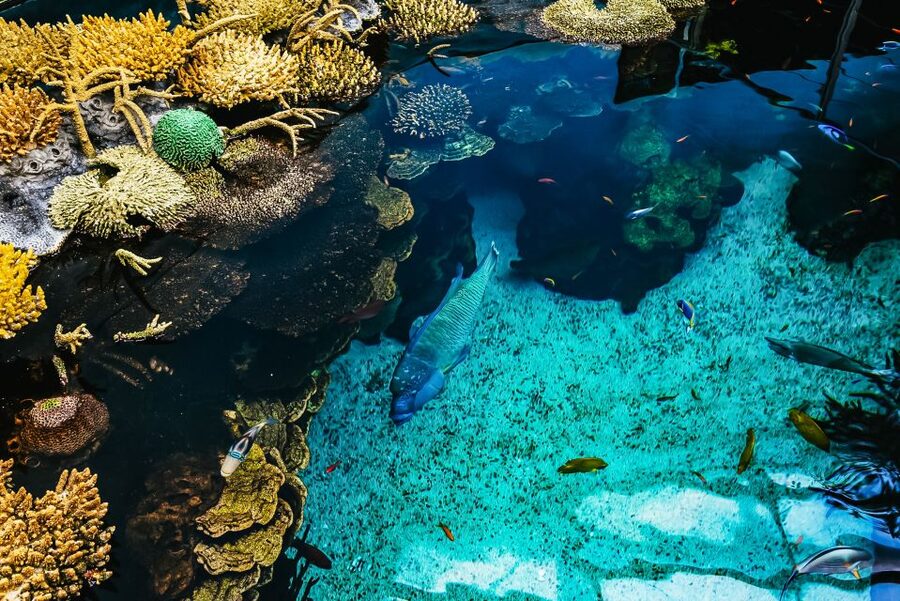
- The central tank is the star: Sharks, rays and many other species swim in a display you can watch from different levels and viewpoints.
- Four ocean regions shape the visit: Exhibits represent the North Atlantic, Antarctic, Temperate Pacific and Tropical Indian Ocean.
- The ticket includes both exhibition types: Your one-day admission covers permanent and temporary exhibitions.
- Sea otters are a major draw: The aquarium highlights a pair described as Europe’s only two existing sea otters.
- A guide costs extra: Pre-bookable tours are offered in English, Spanish and Portuguese. Guides such as Bruno and Silvia have helped bring marine-life details to life.
- Plan around the hours: The aquarium is open daily from 10:00 AM to 8:00 PM, with last entry at 7:00 PM.
A vast tank at the heart of the visit

The Oceanário opened in 1998 on the former Expo 98 site and has since welcomed visitors from around the world. Its scale is impressive, but the most effective idea is simple: a central aquarium sits at the heart of the building, with large acrylic panels separating four ocean habitats while keeping the full display visually connected.
That layout gives you a sense of different seas sharing one space. You can look for familiar animals such as sharks and rays, then follow the wider mix of marine life around the main tank. More than 8,000 creatures from about 500 species are presented across the aquarium, so there is plenty to notice beyond the largest animals.
The central tank deserves time. You can view it from several levels and spots around the building, and each angle changes what catches your eye. A ray gliding past may hold your attention one moment; a school of fish or a shark crossing the frame may take over the next.
I would resist the urge to hurry through the first time you see it. Some people spend a long stretch simply watching the tank, and the aquarium’s quiet corners and benches make that an easy choice. If your schedule allows, circle back to the main display after exploring the other habitats. Familiarity helps you notice animals you missed at first.
More tickets in Lisbon:
- Lisbon: Jerónimos Monastery Entrance Ticket
★ 4.1 · 14,164 reviews - Lisbon: Luz Stadium Tour & SL Benfica Museum Ticket w/Scarf
★ 4.7 · 3,264 reviews - Lisbon: São Jorge Castle E-Ticket and Audio Guide
★ 4.3 · 2,182 reviews
Four oceans, one connected display
The aquarium’s four represented regions are the North Atlantic, Antarctic, Temperate Pacific and Tropical Indian Ocean. Each section gives you a different set of marine environments to compare, while the central tank creates the impression that the animals are moving through a single great expanse of salt water.
This design is a useful way to think about the ocean as connected rather than divided into neat boxes. It also makes the visit easier to follow: you can move from one region to the next, then return to the central tank to see how its larger display ties the experience together.
There is a lot to take in, but the aquarium is not simply a parade of big animals. Smaller exhibits and information about individual species add detail to the broad view. If you enjoy reading display information, you can slow down and learn more about the animals in front of you. If you are visiting with children, the range of creatures gives you plenty of chances to stop and point out something new.
The design may feel familiar if you have visited other large aquariums, and it is not a substitute for seeing marine life in the wild. Its strength is bringing a broad range of species into a well-planned indoor visit, with the central tank giving the experience a strong visual focus.
Sea otters, sharks and smaller discoveries

The sea otters are one of the aquarium’s most talked-about attractions. The Oceanário highlights its pair as the only two existing sea otters in Europe, and their playful behavior can make them a memorable stop. If seeing them is a priority, check the aquarium’s current feeding times online before you go. That timing tip can help you plan your route around an active moment rather than hoping to catch one by chance.
Sharks and rays are another reason to linger around the main tank. Their size and movement make them easy to spot, but the viewing points are also good for simply watching the water settle into a slower rhythm. The central display is large enough that you can shift position and find a different scene without leaving the main area.
The collection includes many other species, too, from fish to puffins and penguins. The appeal is not only ticking off famous animals. It is also seeing how many kinds of marine life share the exhibits and taking time to notice the smaller creatures that might otherwise pass in the background.
Some people wish they could get closer to the penguins or interact with them. This is an aquarium visit, not a hands-on animal encounter, so plan on observing rather than touching. That distance is part of the experience: you watch the animals in their displays and let them carry on with their own routines.
Go independently or add a guide

The standard entrance ticket is self-guided. You can move through the permanent and temporary exhibitions at your own pace, pausing as long as you like at the central tank or moving on when a display is busy.
For a more structured visit, guided tours are available for an extra cost and must be booked in advance. Tours are offered in Portuguese, Spanish and English. Guides can add context about species and help answer questions; past tours have been led by people named Bruno, Silvia, Sophia and Katie. Those names are examples, not a promise of who will lead your tour.
The added cost makes the most sense if you want more explanation than the display information provides, or if you are visiting with children who enjoy asking questions. A marine-life guide can turn a walk past tanks into a more focused lesson. If you prefer to set your own pace, the standard ticket still gives you access to all the exhibitions.
There are also educational activities for schools, families and organized groups, but these need to be arranged ahead of time. If you are planning a group visit, check on those options before arriving rather than counting on booking them on the day.
More tours and experiences in Lisbon:
- Lisbon City Center Tour – The Unmissable Lisbon
★ 5.0 · 22,234 reviews - Lisbon: Sintra, Pena, Regaleira, Cabo da Roca & Cascais
★ 4.7 · 19,656 reviews - Lisbon: History, Stories and Lifestyle Walking Tour
★ 4.8 · 10,902 reviews - Lisbon: Sunset Boat Party Cruise with DJ and Open Bar
★ 4.5 · 10,378 reviews
How much time to allow
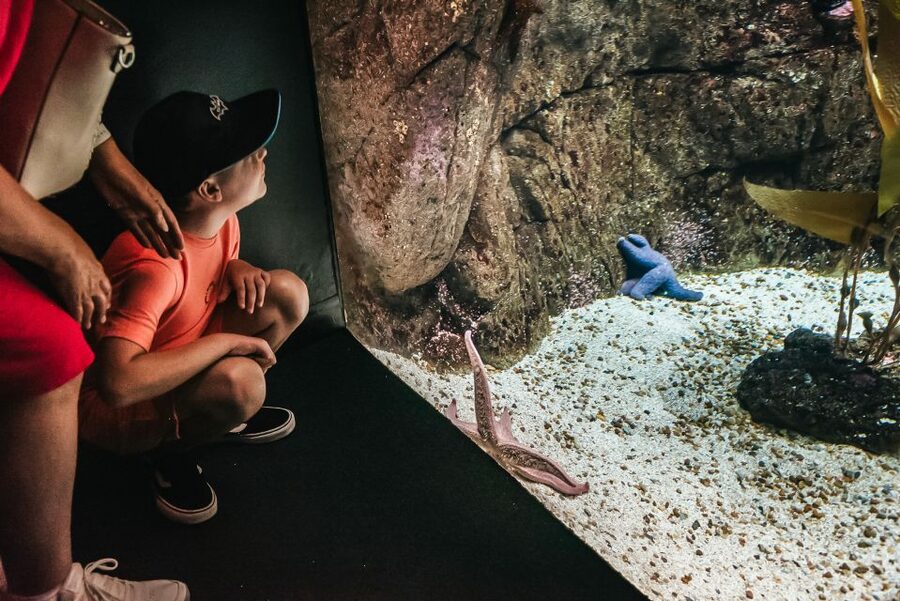
Your ticket is valid for one day, and the aquarium is open from 10:00 AM to 8:00 PM, with last entry at 7:00 PM. There is no fixed visit length, which suits different travel styles: you can make a focused stop or give the exhibits a larger part of your day.
A few hours is a sensible allowance if you want to explore the main tank, visit the different ocean regions and take time with the smaller displays. Some people have spent around three and a half hours inside, especially when they lingered at the central aquarium. A guided tour may take around an hour and a half, depending on the tour you book.
The aquarium can also be a handy indoor plan on a very hot or rainy day. That is particularly useful in Lisbon, where a change in weather can make an outdoor plan less appealing. If you are fitting it into your last day before a flight, leave enough time to get from Parque das Nações to the airport and do not assume you can see everything in a quick pass.
Crowds can change the pace. School groups and busy periods may make it harder to get a clear view at some exhibits, even though the aquarium has plenty of viewing spots. Arriving near opening time or visiting later in the day may help you find a calmer stretch, but it cannot guarantee an empty aquarium. One visitor’s timing tip was to go a couple of hours before closing; keep in mind that last entry is at 7:00 PM.
Getting to Parque das Nações

The Oceanário sits on the waterfront in Parque das Nações, a district developed for Expo 98. From Lisbon’s historic center, you can reach it by bus, metro, train, boat or car. It is also a stop on hop-on hop-off bus routes.
For the metro, follow the red M signs and take the red line to Oriente, the line’s last stop. Buses serving Oriente include routes 5, 10, 19, 21, 28, 50, 68, 81, 82 and 85. The nearest stop is Oriente, from which you can continue to the aquarium.
The location is convenient by public transport, but it is not right beside the old-town sights. If your Lisbon schedule is tight, consider grouping the aquarium with other plans in Parque das Nações rather than making a separate trip across town. If you have a free half-day, the visit can offer a welcome change of pace from historic streets and outdoor sightseeing.
Is the $29 ticket good value?
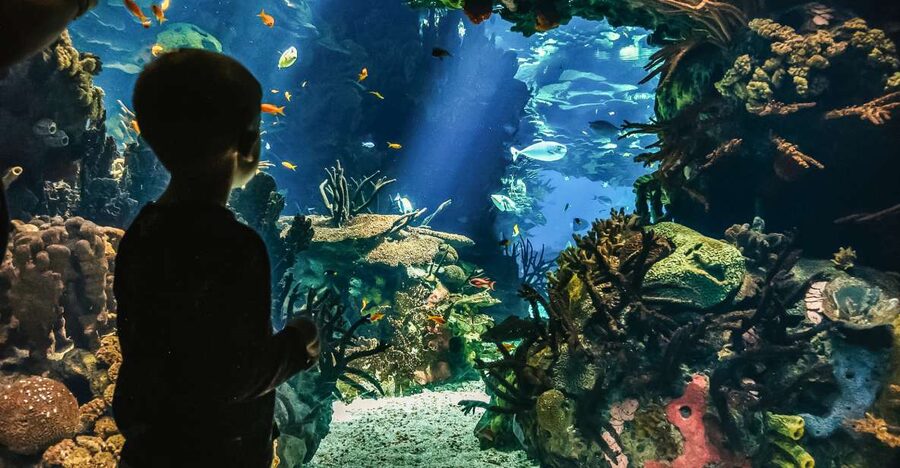
At $29 per person, this is best value if you plan to spend several hours exploring and care about marine life, family-friendly attractions or a weather-proof activity. The price covers access to all permanent and temporary exhibitions, so you are not paying admission just to glimpse the central tank and leave.
The aquarium’s strongest value lies in its scale and layout. You get a broad look at animals from four ocean regions, a central display that rewards a slower visit, and smaller habitats that add variety. If you are travelling with children, the range of creatures and easy-to-follow exhibits can make the ticket worthwhile for the whole family.
The price may feel less compelling if you have little interest in aquariums or only a short window in Lisbon. The Oceanário is outside the historic center, and transit adds time to the outing. Food, drinks and souvenirs cost extra, and guided tours are not included in the standard admission.
A skip-the-ticket-line option is offered, but that does not mean every viewing spot will be quiet. The aquarium can be busy, and a ticket does not remove crowds inside. The standard admission is also non-refundable, so check your plans before booking.
Who will enjoy this visit most?

I would put the Oceanário high on the list for families, marine-life fans and anyone who wants a calm indoor break. It works across age groups, from young children who are excited by fish and otters to adults who enjoy watching the central tank or reading about the species.
It is also a sound choice on a hot or wet day, or when you want a slower activity between Lisbon’s more demanding sights. The aquarium is wheelchair accessible, with ramps and elevators throughout the building in line with European accessibility laws.
If you have only a short stay and are focused on the historic center, weigh the travel time against your interest in aquariums. You do not need a guide to make the visit worthwhile, but a pre-booked tour can add useful explanation if learning about marine life is part of the appeal.
Should you book?

Book the Oceanário if you want an engaging indoor visit, especially if sharks, rays, sea otters or family activities are on your Lisbon wish list. Give yourself a few hours, make time for the central tank and check otter feeding times before you go.
Skip it if aquariums are not your thing or your schedule leaves little room to travel beyond the center. For everyone else, the combination of a striking main display, four ocean regions and a relaxed pace makes the $29 ticket a worthwhile use of part of a Lisbon day.
FAQ
What does the entrance ticket include?
It includes admission to the Oceanário and access to all permanent and temporary exhibitions for one day.
How much does the ticket cost?
The listed price is $29 per person.
How long should I plan to spend inside?
There is no fixed visit duration. A few hours gives you time to see the main tank and other exhibits; some visits last around three and a half hours.
What are the Oceanário’s opening hours?
It is open daily from 10:00 AM to 8:00 PM. Last entry is at 7:00 PM.
Is a guided tour included?
No. Guided tours cost extra and must be pre-booked. They are available in Portuguese, Spanish and English.
How do I get to the Oceanário by metro?
Take the red metro line to Oriente, the line’s last stop, and follow the red M signs.
Is the Oceanário wheelchair accessible?
Yes. Ramps and elevators are available throughout the building.
Can I buy food and drinks at the Oceanário?
Food and drinks are available for purchase. They are not included in the entrance ticket.
Lately reviewed in Lisbon
- Lisbon: Sunset and Wine Luxury Catamaran Cruise★ 5.0 · 17 reviews
- Lisbon Sunset Boat Tour with local Snacks & Drinks★ 4.9 · 11 reviews
- Lisbon: Street Art Tour★ 4.7 · 66 reviews
- Lisbon: Streets of Alfama Private Segway Tour 1.5hour★ 4.8 · 15 reviews
- Lisbon: Sunset Boat Party with 2 Drinks and Free Club Entry★ 3.9 · 93 reviews
- Tuk Tuk Lisbon: Street Art 2-Hour★ 5.0 · 6 reviews
- Lisbon 3-Hour Street Art Tour★ 4.6 · 63 reviews
- Lisbon Street Art Tour★ 5.0 · 4 reviews
Lisbon Tours, compared.

Lisbon City Center Tour – The Unmissable Lisbon
Read our review →
Sintra, Pena, Regaleira, Cabo da Roca & Cascais
Read our review →


Sunset Boat Party Cruise with DJ and Open Bar
Read our review →
Pena Palace, Sintra, Cabo da Roca, & Cascais Daytrip
Read our review →
True 4Hour Private Tuk Tuk Tour: Discover Lisbon with a Local!
Read our review →