
Reviewed · LISBON WALKING TOURS
Half Day Historical Walking Tour about the Slave Trade in Lisbon
Lisbon’s grand Age of Discovery story has a hard-to-ignore missing chapter: the trade in enslaved people that helped shape Portugal and its empire. This three-hour walk brings that history into the streets, connecting places in Alfama and Baixa with the lives and labor that are often left out of the usual sightseeing tale.
I like two things especially. The route gives you a different way to read familiar neighborhoods, from the waterfront to the old city center. And Rui Fernandes uses images and historical documents to make a difficult subject easier to follow, while leaving room for questions and discussion.
The main consideration is the subject itself. This is a serious account of slavery, colonialism, and their continuing effects, not a light stroll with a few historical anecdotes. You’ll also be on your feet for about three hours, so wear comfortable shoes and think twice if walking is difficult for you.
What to Know Before You Go
- The walk starts in Alfama and ends at Largo do Carmo, taking you through parts of the old town and central Lisbon.
- The focus is broader than Portugal’s Atlantic trade alone, including earlier forms of slavery and the role of religious and political institutions.
- Rui Fernandes is the guide named in accounts of this tour, and he uses images and documents to support the discussion.
- The group is limited to eight people, a useful size for a topic that often prompts questions and conversation.
- The price is $39.78 per person for about three hours, with a professional guide and local taxes included.
- This is history tied to specific streets and squares, but it is not a museum visit. Admission is not part of the tour, and food and drinks are not included.
A Different Route Through Lisbon’s Past

Portugal’s maritime expansion is often presented as a story of navigation, trade, and exploration. This tour asks what that story leaves out. It traces how slavery existed in the region before Portugal entered the Atlantic trade in the mid-15th century, then follows the ways enslavement became part of colonial commerce and daily life in Lisbon.
That broader frame matters. It helps you see the Atlantic trade not as an isolated chapter, but as part of a long history involving different societies, institutions, and forms of power. The tour also considers the continuing effects of colonialism, linking past decisions to Portugal’s political history and present-day debates about memory and identity.
The walk covers well-known areas, but the focus changes what you notice. Rather than treating Alfama and Baixa as scenery between photo stops, your guide uses them as a way to discuss who lived and worked there, how the city’s economy functioned, and which parts of the past are visible or missing today.
Expect a guided conversation, not a polished show. Rui Fernandes is described as prepared to answer questions and to use historical material to support the story. That approach suits a subject where simple explanations can hide important differences between eras, regions, and people’s experiences.
More walking tours in Lisbon:
- Lisbon: History, Stories and Lifestyle Walking Tour
★ 4.8 · 10,902 reviews - Best of Lisbon Small-Group Guided Walking Tour
★ 5.0 · 4,869 reviews - Lisbon: Food and Wine Small Group Walking Tour
★ 4.9 · 4,082 reviews
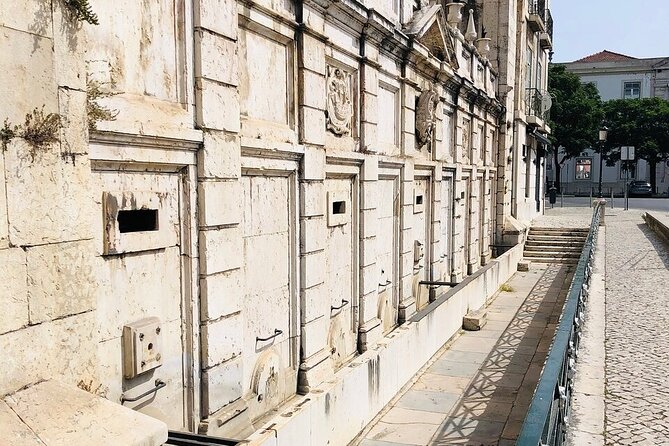
From Largo do Chafariz de Dentro into Alfama
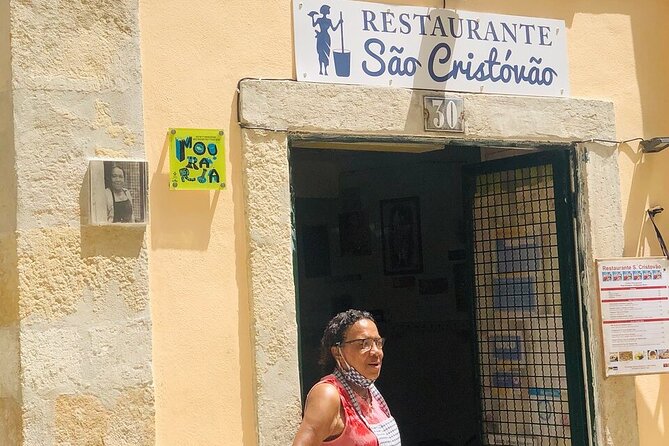
The meeting point is Largo do Chafariz de Dentro, at number 30, in Alfama. The group begins with a short introduction to the theme before walking into Lisbon’s oldest neighborhood. It is a practical place to start: you are already in the historic quarter, and the first section sets up the long view of slavery that the tour will return to later.
In Alfama, the discussion reaches back before the Atlantic trade. You’ll learn how various civilizations that settled in Portugal, including the Romans and Moors, practiced slavery, then hear how the Portuguese became involved in the Atlantic trade in the mid-15th century.
This context is valuable because it keeps the story from starting too late. The history of enslavement did not begin with Portuguese voyages across the Atlantic, even though Portugal became an early and significant participant in that system. The stop gives you a framework for understanding how older practices and newer colonial ambitions intersected.
Alfama is also a lived-in neighborhood, not a display case. The streets make a strong setting for a discussion of the people who inhabited Lisbon across different periods. But don’t expect every historical fact to have a surviving plaque or building attached to it. Part of the guide’s work is helping you imagine lives and systems that left an uneven physical record.
At Campo das Cebolas, Memory in the Making
Campo das Cebolas is a short stop, but it raises a question that runs through the whole walk: how does a city choose to remember its past? The tour visits the location designated for a monument to the victims of the slave trade.
The site makes the subject tangible in a different way from a preserved building. Here, the focus is not simply on what happened, but on public memory and recognition. It is a useful pause between the neighborhood streets and the grand commercial spaces ahead.
Because this is a brief stop, don’t expect a long monument visit. Its value lies in the discussion around the place and what a memorial can represent. The point is especially clear when set against Lisbon’s better-known celebratory stories of exploration and empire.
Commerce and Empire at Praça do Comércio
Praça do Comércio, also known as Terreiro do Paço, was the commercial heart of Lisbon. Here, the tour connects slavery to colonial trade and the wider economic system that supported Portugal’s empire.
The square’s scale and formal architecture can make it feel like a stage for national history. The guide’s task is to add the human dimension: commerce was not only ships, goods, and markets, but also the buying and selling of people. That shift in perspective is one of the walk’s most important lessons.
This stop is not a visit to an exhibition, and there is no admission fee. Instead, the setting gives you a chance to consider how a city’s commercial center can embody both prosperity and exploitation. You may already know the square as a landmark; the tour gives you a more complicated reason to remember it.
More history tours in Lisbon:
- Lisbon: Live Fado Show with Port Wine in Historic Center
★ 4.7 · 4,166 reviews - Lisbon: Fado Show with Wine in a Historic Venue
★ 4.8 · 1,294 reviews - Explore Lisbon by Tuk Tuk: History and Viewpoints
★ 5.0 · 840 reviews - Lisbon: Daytime or Sunset Boat Cruise with History and Wine
★ 4.9 · 819 reviews
Daily Life in Baixa, Rossio, and Restauradores
The route continues through Baixa, Rossio, and Restauradores, where the focus turns from trade and policy to the everyday lives of enslaved people in Lisbon. The discussion includes captives from Africa and elsewhere, and what it meant to live in the city under enslavement.
This part is especially useful if you want to understand slavery as more than a distant imperial system. It brings the story into ordinary urban life and asks how enslaved people interacted with the streets, households, and institutions around them. The tour’s aim is not just to explain how Portugal participated in the trade, but to make clear that enslaved people were part of Lisbon itself.
The route also helps you orient yourself in central Lisbon. You’ll see major areas while following a story that most standard city walks do not make their main subject. If you’re pairing this with another sightseeing tour, this section adds a different layer to familiar landmarks rather than simply repeating their usual history.
The pace is described as moderate, with stops along the way. Still, three hours on foot is three hours on foot. Comfortable shoes are a sensible choice, and the activity is not recommended for people with walking difficulties.
Igreja de São Domingos and the Role of Religion
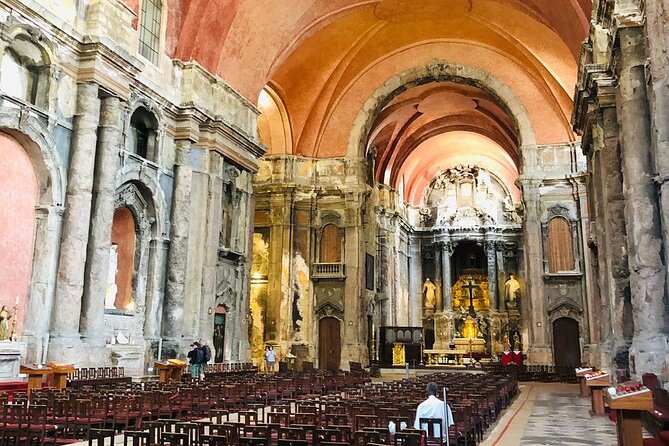
At Igreja de São Domingos, the guide discusses how enslaved people interacted with Lisbon’s religious organizations. Religion was one of the institutions that shaped life in the city, so this stop adds an important social and spiritual dimension to the walk.
It also helps avoid a narrow explanation of slavery as only an economic matter. The tour considers the role of religious institutions alongside monarchies, cultural practices, and other forces. You’ll have a chance to think about the ways belief and power could overlap, and how people living under enslavement encountered those institutions.
The stop is about ten minutes, so it works best as one part of the wider story rather than a stand-alone church visit. If you want to explore the church at length, the tour’s schedule may not leave time for that.
Ending at Largo do Carmo and Portugal’s Colonial Shift
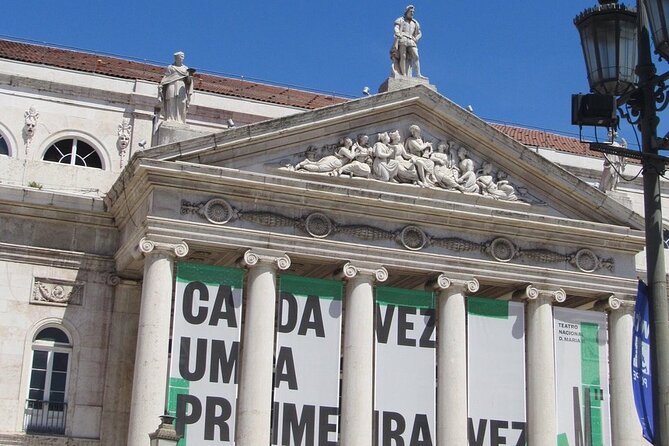
The walk ends at Largo do Carmo, a place associated with the coup and revolution of April 25, 1974. From there, the discussion turns to the political changes that followed and the demise of Portugal’s colonial empire during the mid-1970s.
This ending gives the tour a clear timeline beyond the trade itself. It connects centuries of colonial history to a major turning point in modern Portugal, showing that the legacy of empire did not stop when the Atlantic trade changed or ended. The subject moves from commerce and daily life to political change and national memory.
Because the tour finishes here, you can plan to continue exploring the area afterward or head elsewhere in the city. The end point is not the same as the starting point, so account for that when planning your day. Hotel pickup and drop-off are not included.
Is Three Hours Worth $39.78?
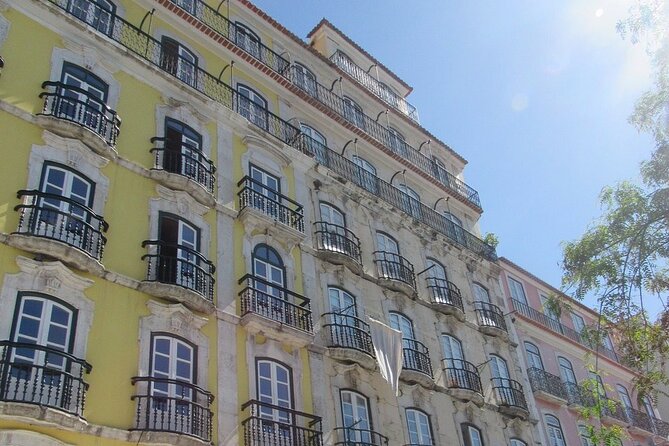
At $39.78 per person, the value depends on what you want from a Lisbon tour. You are paying for a professional guide, a small group of no more than eight, and a carefully focused history lesson that connects several neighborhoods and landmarks. Local taxes are included.
You are not paying for entry to paid attractions, food, drinks, or transportation to and from your hotel. The tour is a walking experience, so the value is in the guide’s interpretation and the time spent connecting place with history. If you’re mainly looking for panoramic views or a broad overview of Lisbon’s monuments, another tour may suit you better.
For anyone who wants a fuller account of Portugal’s past, the price is reasonable for three hours with a specialist focus. Rui Fernandes is repeatedly associated with the tour, and his use of pictures and documents can help make complex historical material more accessible. You can ask questions rather than simply listen to a memorized script.
The topic can be emotionally demanding. That is not a flaw, but it is worth knowing before you book. You’ll hear about human trafficking, enslavement, colonial power, and the effects that continue to shape social and political life. The tour handles difficult material directly, so come ready to listen and engage.
Who Should Book This Walk?
I’d recommend this tour if you want more than a standard introduction to Lisbon’s landmarks. It is a strong choice for history-minded visitors, people interested in African and Portuguese history, and anyone who wants the Age of Discovery placed in a more honest context. The small group and question-friendly format are also a plus if you prefer discussion to a large crowd following a flag.
The tour can work for teenagers who are ready for serious subject matter. The history is presented in a way that can hold attention, but the themes are not light or suitable for every child. If you’re traveling with young people, consider whether they are comfortable discussing slavery and colonialism for several hours.
Book it if you want to leave Lisbon with a better grasp of how slavery shaped the city and Portugal’s history. Skip it if you want an easy, scenic walk with little discussion, or if a three-hour route on foot is not a good fit. For a thoughtful look at the people and systems often pushed to the edge of Lisbon’s story, this is time well spent.
FAQ
How long is the tour?
The walk lasts about three hours.
Where does the tour start and end?
It starts at Largo do Chafariz de Dentro, 30, in Lisbon, and ends at Largo do Carmo.
What language is the tour offered in?
The tour is offered in English.
How large is the group?
The maximum group size is eight people.
What is included in the price?
The price includes a professional guide and local taxes. Food, drinks, and hotel pickup and drop-off are not included.
Can I cancel for a refund?
Yes. You can cancel up to 24 hours before the start time for a full refund. Cancellations made less than 24 hours before the start time are not refunded.
Lately reviewed in Lisbon
- Lisbon: Sunset and Wine Luxury Catamaran Cruise★ 5.0 · 17 reviews
- Lisbon Sunset Boat Tour with local Snacks & Drinks★ 4.9 · 11 reviews
- Lisbon: Street Art Tour★ 4.7 · 66 reviews
- Lisbon: Streets of Alfama Private Segway Tour 1.5hour★ 4.8 · 15 reviews
- Lisbon: Sunset Boat Party with 2 Drinks and Free Club Entry★ 3.9 · 93 reviews
- Lisbon 3-Hour Street Art Tour★ 4.6 · 63 reviews
- Lisbon Street Art Tour★ 5.0 · 4 reviews
- Tuk Tuk Lisbon: Street Art 2-Hour★ 5.0 · 6 reviews
Lisbon Walking Tours, compared.
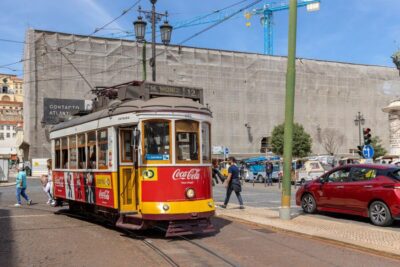

Best of Lisbon Small-Group Guided Walking Tour
Read our review →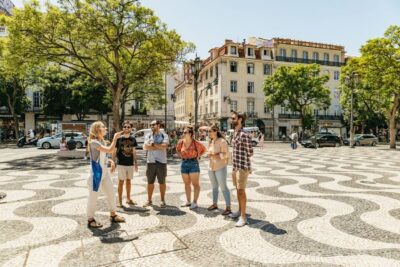
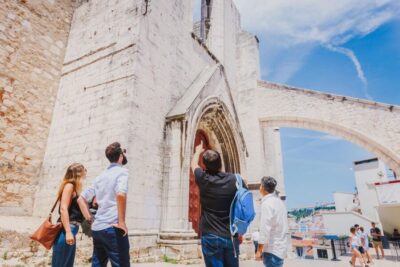
Best of Lisbon Walking Tour: Rossio, Chiado & Alfama
Read our review →

Sintra & Cascais Day Tour with Pena Palace Entry and Gardens Walk
Read our review →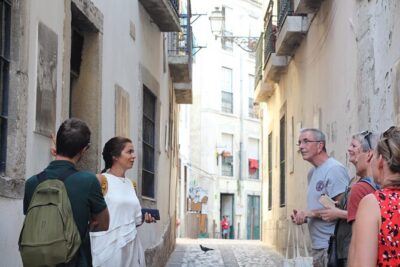
Lisbon Roots – Small group Food & Culture Walking Tour w/tastings
Read our review →
Starter Walking Tour to the highlights in German
Read our review →Browse the lists this tour appears in