

Reviewed · LISBON WALKING TOURS
Audio Guide City Walk Lisbon for Cruise Guests
Lisbon’s hills and layers of history make a good case for exploring on foot, and this self-guided audio walk begins and ends at the cruise terminal. I like that you can pause for a café or photos without holding up a group, and that the route pairs famous sights with details such as the Roman theatre ruins and the Fado Museum.
The trade-off is the terrain: the walk climbs to viewpoints and the castle before descending to Baixa, so expect some steep stretches. The audio guide gives you freedom, but you’ll need a charged smartphone and enough stamina to handle the hills.
Key points to know
- The walk starts and finishes at the cruise terminal, with no transport included.
- Allow two to three hours for the route, then add time for café stops, shopping or a longer look at the sights.
- Portas do Sol offers a view across the old town to the Tagus River, after an uphill stretch through historic quarters.
- The route includes both hilltop Alfama sights and flatter Baixa, ending near Praça do Comércio before returning to the terminal.
- The $11 price is per smartphone, so one guide can be shared by people walking together, but it cannot be activated on multiple phones.
- English and German audio is available, with GPS autoplay or manual selection from a map or audio list.
From the cruise terminal into old Lisbon

This route is designed around the practical reality of a port call: you can set out from the cruise terminal on foot and return there at the end. There is no bus or other transport in the price, so the walk itself is the way you get between the sights.
The first major climb takes you to Igreja de Santa Engrácia, the imposing building that serves as Portugal’s National Pantheon. Its scale and formal presence make it a striking first stop, but reaching it also gives you an early taste of Lisbon’s hills. Take your time rather than treating the route as a race. The audio guide is meant to work at your pace, and there is no group to keep up with.
From Santa Engrácia, you pass Igreja de São Vicente de Fora on the way to Portas do Sol. The viewpoint looks across the old town toward the Tagus, giving you a useful sense of how the city sits above the river. It is also a natural place to pause, take photos and get your bearings before continuing uphill.
That freedom to stop is one of the strongest reasons to choose an audio walk over a fixed group tour. You can listen to a segment, linger at a view or take a rest without worrying that a guide is waiting down the street. One person who had previously joined a ship excursion in Lisbon still found new corners on this walk, and particularly valued being able to stop at a café and later for a meal without missing the rest of the route.
More walking tours in Lisbon:
- Lisbon: History, Stories and Lifestyle Walking Tour
★ 4.8 · 10,902 reviews - Best of Lisbon Small-Group Guided Walking Tour
★ 5.0 · 4,869 reviews - Lisbon: Food and Wine Small Group Walking Tour
★ 4.9 · 4,082 reviews
Climbing toward Castelo de São Jorge

The walk continues uphill to Castelo de São Jorge, one of the route’s main landmarks. The audio guide helps connect the sights as you go, but this is still a self-guided experience: you decide how long to spend at each point and when to move on.
The climb is worth factoring into your plans. Lisbon is known for its steep streets, and this route does not avoid them. A previous participant specifically noted some demanding uphill stretches, while also observing that hills are part of the city’s character. That is a useful, plain-spoken warning. If you enjoy walking and can manage slopes, the climbs are part of the experience. If you have mobility limitations, the route may not suit you.
The guide takes you onward toward the Cathedral, Sé Patriarcal, with the ruins of an ancient Roman theatre along the way. This sequence gives the walk a sense of time and place: a medieval fortress, a historic cathedral and traces of Roman Lisbon all appear within the same old-town outing. You do not need to enter every site to appreciate the route, and any entrance fees are separate.
The freedom to choose your pace matters here. You can stop for a closer look where access allows, or keep going if you are watching the clock before returning to the ship. The guide is a companion for the walk, not a ticket to attractions or a substitute for transport.
Down through Baixa and its tiled façades
After the higher old-town sights, the route heads down into Baixa. This change of pace is welcome after the climb. The district is known for façades decorated with azulejos, the Portuguese ceramic tiles that lend many buildings their distinctive patterns and color.
The descent shifts the focus from hilltop views and narrow historic quarters to streets with a more formal, planned feel. It is a good stretch for looking up at the buildings rather than hurrying toward the next marker. With GPS audio, you can choose to play individual files from a map or list, or let the guide play automatically as you move through the route.
Elevador de Santa Justa is among Lisbon’s best-known sights and appears on the Baixa portion of the walk. The historic elevator is a memorable piece of city architecture, and a natural pause for photos. The guide does not include entrance fees, so do not assume that the audio purchase covers a ride or access to any attraction. You can still see the landmark as part of the walk without treating every stop as an entry-ticket visit.
Rua Augusta then leads toward its triumphal arch and Praça do Comércio. This central square occupies the site where the Portuguese king’s palace once stood, before the 1755 earthquake destroyed the city. That context makes the open square more than a grand endpoint: it helps explain how Lisbon’s present-day center grew from catastrophe and rebuilding.
The walk’s route through Baixa is a useful counterpoint to Alfama’s uphill lanes. You get changes in architecture and atmosphere without needing to arrange transport between districts. Just remember that a downhill stretch can still be tiring, especially after a long day ashore.
The return to the terminal
From Praça do Comércio, the route turns back toward the cruise terminal, passing more historic buildings and the Fado Museum. Fado, Portugal’s best-known traditional music, gives the final part of the walk a cultural note beyond architecture and views. The museum is a landmark on the route; admission is not included.
The return leg is also where the self-guided format can be especially handy. If you have time, you can stop for a drink, browse shops or take a rest in a café. If your ship’s schedule is tighter, you can keep moving and save those pauses for another visit. The audio guide does not set the pace for you, but you remain responsible for watching the time and making it back to the terminal.
Plan for two to three hours of walking, as described, and treat that as the route time rather than a promise that includes every possible stop. Photos, shopping, food or time inside attractions will add to it. Since the tour does not include transportation, there is no built-in shortcut if you decide you are tired or running late.
More self-guided tours in Lisbon:
- Lisbon: São Jorge Castle E-Ticket and Audio Guide
★ 4.3 · 2,182 reviews - Lisbon: Tram 28 Entry Ticket & Audio Guide with 24-Hour Pass
★ 4.0 · 930 reviews - Lisbon: Jerónimos Monastery E-Ticket and Audio Guide
★ 3.7 · 660 reviews - Lisbon: National Tile Museum E-Ticket & Audio Guide
★ 4.3 · 121 reviews
What the app adds, and what it does not
The guide is provided through the Aoyo Audioguides app. After booking, you receive an email with a download link and voucher code; it may take up to five minutes to arrive. You can follow the map and select audio files yourself, use a list, or switch on GPS autoplay. That gives you a choice between a more controlled visit and a hands-free walk.
A charged smartphone is essential. The voucher code works on one phone only, and the $11 price is per smartphone rather than per person. If two people walk together and are comfortable sharing one device, one purchase may be enough. If each person wants independent audio, each needs a separate guide.
The audio is available in English and German. It is not a live guide, so there is no one to answer questions or adjust the explanation to your interests. In return, you avoid the fixed pace and schedule of a group. The guide is stated to remain valid forever after purchase, while the activity information also describes a 365-day validity period. Check the terms shown when booking if timing your purchase far in advance matters to you.
Is $11 good value?
At $11 per phone, the price is modest for a route that covers several of Lisbon’s best-known old-town sights and gives you a structured way to connect them. The strongest value is not simply the audio itself. It is the ability to explore without booking a group, while still getting commentary at the places where you need it.
The price works best if you will use the guide for most of the walk and value having a route laid out for you. It is less compelling if you prefer to wander without audio, or if you plan to visit several attractions and expect admission to be included. It is not. Transport is also separate, though the route starts at the terminal and is designed as a walking tour.
For two people sharing one phone, the cost can be especially economical. The limitation is that the voucher cannot be redeemed on multiple smartphones. Agree on who carries the device, and consider bringing headphones if you want to hear the commentary clearly without holding the phone up at each stop.
The tour offers free cancellation up to 24 hours in advance, and booking can be reserved without paying immediately. Once the voucher is redeemed, however, it is non-refundable. That makes it sensible to wait until you are confident about your plans before activating the code.
Who should choose this walk?
I’d consider this a good fit if you want a flexible introduction to Lisbon’s old town and are comfortable walking uphill. It suits independent visitors who like to stop for photos, browse or sit down for a coffee without feeling they are abandoning a group. It can also work well if you have already seen the main sights on a previous visit and want a relaxed route that may take you past less familiar corners.
It is a weaker choice if you need step-free, low-effort sightseeing or want a guide to handle directions and answer questions in person. The activity is marked wheelchair accessible, but it is also listed as unsuitable for people with mobility impairments, and the route includes steep climbs. Those details do not sit neatly together, so do not rely on the accessibility label alone if you need a specific level of access.
Before setting out, charge your phone, download the app and make sure you know how to activate the guide. Check the ship’s return time, allow a buffer for the walk back and any pauses, and be ready for hills. If those conditions suit you, this is an inexpensive way to explore Lisbon on your own terms.
Should you book it?
Book this audio walk if you want a clear, independent route from the cruise terminal through Alfama and Baixa, and you value the option to pause whenever you like. The mix of viewpoints, historic buildings, tile-covered façades and the final stretch through Praça do Comércio gives you a broad introduction without locking you into a group schedule.
Skip it if steep streets are a serious problem, if you need a live guide, or if you expect transport and attraction entry to be included. At $11 per smartphone, it is best seen as a flexible walking companion, not an all-in sightseeing package.
FAQ
How long does the walk take?
The route takes about two to three hours. Allow extra time if you plan to stop for photos, shopping, food or rest breaks.
Where does the tour start and finish?
It starts and ends at Lisbon’s cruise terminal. Transportation is not included.
Which sights are included on the route?
The walk goes to Igreja de Santa Engrácia, Igreja de São Vicente de Fora, Portas do Sol, Castelo de São Jorge, the Cathedral and Roman theatre ruins, then through Baixa to Elevador de Santa Justa and Praça do Comércio. The return passes historic buildings and the Fado Museum.
Is the audio guide available in English?
Yes. The guide is available in English and German.
Does one purchase cover more than one person?
The $11 price is per smartphone, not per person. The voucher code is valid for one smartphone only.
What do I need to bring?
Bring a charged smartphone. You receive an email with a link to download the app and a voucher code after booking.
Are entrance fees or transport included?
No. The audio guide does not include transportation or entrance fees.
Can I cancel the booking?
You can cancel up to 24 hours in advance for a full refund. Once you redeem the voucher code, it is non-refundable.
More audio-guided visits in Lisbon
- From/To Lisbon: Sintra Hop-on Hop-off Tickets + Audio Guide
★ 3.7 · 119 reviews - Lisbon: National Palace of Ajuda E-Ticket & City Audio Guide
★ 4.1 · 87 reviews - Lisbon 6H Ride in an Electric Car & GPS Audio Guide
★ 4.5 · 15 reviews - Lisbon: Electric Car Discovery Tour & GPS Audio Guide
★ 4.4 · 15 reviews
Lately reviewed in Lisbon
- Lisbon: Sunset and Wine Luxury Catamaran Cruise★ 5.0 · 17 reviews
- Lisbon Sunset Boat Tour with local Snacks & Drinks★ 4.9 · 11 reviews
- Lisbon: Street Art Tour★ 4.7 · 66 reviews
- Lisbon: Streets of Alfama Private Segway Tour 1.5hour★ 4.8 · 15 reviews
- Lisbon: Sunset Boat Party with 2 Drinks and Free Club Entry★ 3.9 · 93 reviews
- Tuk Tuk Lisbon: Street Art 2-Hour★ 5.0 · 6 reviews
- Lisbon 3-Hour Street Art Tour★ 4.6 · 63 reviews
- Lisbon Street Art Tour★ 5.0 · 4 reviews
Lisbon Walking Tours, compared.


Best of Lisbon Small-Group Guided Walking Tour
Read our review →
Best of Lisbon Walking Tour: Rossio, Chiado & Alfama
Read our review →

Sintra & Cascais Day Tour with Pena Palace Entry and Gardens Walk
Read our review →
Lisbon Roots – Small group Food & Culture Walking Tour w/tastings
Read our review →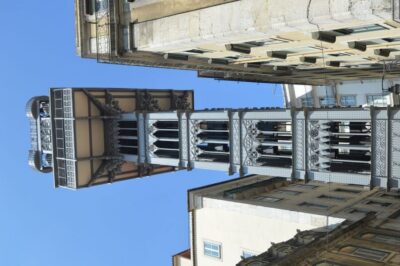
Starter Walking Tour to the highlights in German
Read our review →Browse the lists this tour appears in