
Reviewed · LISBON
Best of Caldas da Rainha with a local guide
Caldas da Rainha’s story begins with a queen, a hot spring and a hospital that has been operating since 1485. On this two-hour walk, you’ll see the old thermal complex and Queen Leonor’s pool, then connect those sights to the town’s church, market and park.
I like the way the route pairs the thermal hospital’s unusual origins with the church’s early Manueline details. I also like that the walk brings you into everyday Caldas, with its year-round street market and ceramic street art, rather than keeping you among historic buildings alone.
One consideration: this is a walking tour, and it is not suitable for wheelchair users or people with mobility impairments or recent surgeries. The advertised price is $41 per person, and transport to the starting point is not included.
At a glance
- A hospital with a remarkable timeline: Caldas da Rainha’s thermal hospital has operated continuously for more than five centuries.
- Queen Leonor’s pool: The tour links the town’s thermal story to the queen’s private bathing pool.
- A church with early Manueline features: Nossa Senhora do Pópulo is small, but its architecture gives you a glimpse of a distinctive Portuguese style.
- A market open every day: You’ll see and smell the town’s street market, which operates year-round.
- A park and an artistic past: D. Carlos I Park provides a quieter setting for hearing how the town became an industrial and artistic centre in the 19th century.
- A local guide, Ivo: He leads the walk in English or Portuguese and can also suggest places to eat and things to see around town.
Starting at the Tourism Office
The tour begins outside the Caldas da Rainha Tourism Office and returns there after two hours. That makes the meeting point easy to identify, and the round-trip format means you finish where you started rather than needing to find your way back across town.
The experience is built around walking and storytelling, not transport between far-flung sights. Wear comfortable shoes, as recommended, and be ready to spend the tour on your feet. The exact order and time spent at each stop are not specified, so think of the itinerary as a guided introduction to several parts of town rather than a timed visit to each site.
The local guide is Ivo, who leads tours in English and Portuguese. His connection to Caldas is part of the appeal: he is from the town and can place its buildings and public spaces in a local context. He also offers suggestions for places to eat and other things to see, useful if you’re staying longer than the two-hour walk.
More guided tours in Lisbon:
- Best of Lisbon Small-Group Guided Walking Tour
★ 5.0 · 4,869 reviews - Lisbon: Private Guided Tuk-Tuk Tour with Hotel Pickup
★ 4.9 · 4,552 reviews - From Lisbon: Fátima, Nazaré, Batalha, and Óbidos Guided Tour
★ 4.7 · 3,060 reviews
At the thermal hospital and Queen Leonor’s pool
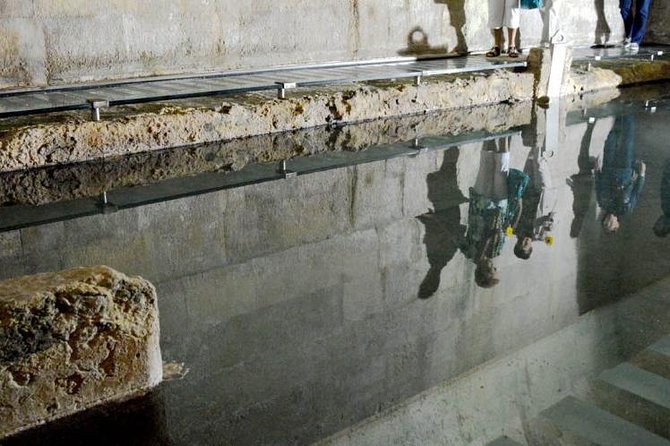
The thermal hospital is the tour’s most distinctive stop. Its history reaches back to Queen Leonor, who saw people bathing in the area’s natural hot springs in search of relief from their ailments. Impressed by what she saw, she had a hospital built at the site in 1485. The complex has continued operating for more than 500 years.
That long, unbroken history gives this stop more weight than a quick look at an old building. The springs were not simply a curiosity: they inspired a place of care that shaped the town’s identity. You’ll hear how the story began and see the queen’s own pool, a direct link to the early days of the thermal hospital.
The comparison with modern spas is an easy one to make, but the important difference is the hospital’s age and purpose. This was a medical institution long before spa travel became familiar. If you’re interested in how health, royalty and local geography shaped a place, this is the part of the walk to listen closely to.
The tour promises a visit to the site and Queen Leonor’s pool, but it does not specify access to every part of the hospital or whether you’ll see operational treatment areas. Go expecting a guided look at the place and its story, not a full medical-history exhibition or a spa session.
Inside Nossa Senhora do Pópulo
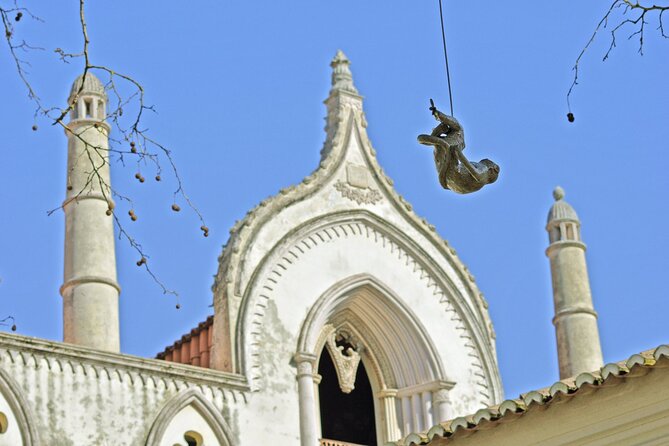
Nearby, the Church of Nossa Senhora do Pópulo offers a change of scale and mood. It is described as a small place of worship, but it holds some of the earliest examples of Manueline architecture, a Portuguese style known for its distinct character.
A guide helps make a small church more rewarding. Instead of simply noting a few decorative details, you can understand why they matter within Portuguese architecture and how the church fits into the town’s past. The tour does not promise a long church visit, so treat this as a focused stop rather than a full architectural study.
The church also complements the thermal hospital well. One tells the story of a royal response to natural springs and human need; the other offers a glimpse of the artistic language used in a place of worship. Together, they give you two different ways to read Caldas: through its public institutions and through its architecture.
The daily market and ceramic street art

Caldas da Rainha’s street market is notable for a simple reason: it is open every day of the year. The tour invites you to see and smell it, bringing a sensory stop into a walk otherwise centred on history, architecture and green space.
A year-round market can offer a glimpse of ordinary town life, not only a scene arranged for a special event. You can take in the stalls and their smells as you pass through, while Ivo helps connect the market to the wider town. The tour information does not specify what is sold or how much time you’ll spend there, so don’t plan on a long shopping stop.
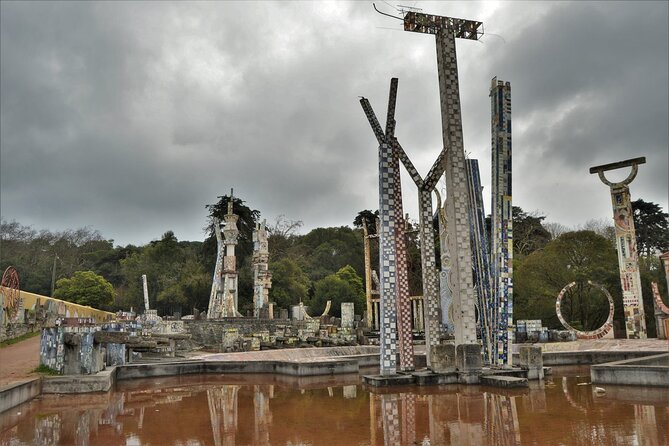
Ceramic street art is another piece of the town’s identity you’ll encounter. The tour frames it as art in public space, rather than a visit to a gallery. That is a useful way to see how ceramics can appear in the daily streetscape, and how the town’s artistic character extends beyond its formal cultural sites.
If you’re hoping to buy ceramics or visit a workshop, this walk does not promise either. Its value is in pointing out the art you can see during the route and explaining its place in Caldas. You can ask Ivo for suggestions if you’d like to explore further after the tour.
Or try something else on the same day:
- Lisbon City Center Tour – The Unmissable Lisbon
★ 5.0 · 22,234 reviews - Lisbon: Sintra, Pena, Regaleira, Cabo da Roca & Cascais
★ 4.7 · 19,656 reviews - Lisbon: Jerónimos Monastery Entrance Ticket
★ 4.1 · 14,164 reviews - Lisbon: History, Stories and Lifestyle Walking Tour
★ 4.8 · 10,902 reviews
A gentler finish in D. Carlos I Park
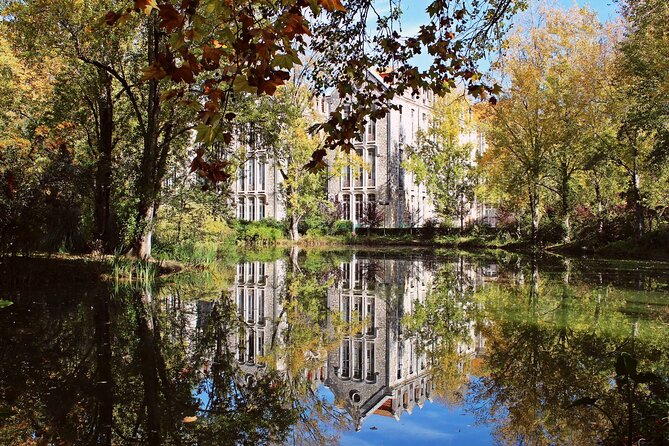
D. Carlos I Park gives the walk a quieter final chapter. The garden is described as beautiful and romantic, and it provides a green setting for the guide’s overview of Caldas in the 19th century.
That period was a golden age for the town, when it became an industrial and artistic hub. Two names help put a face on that story: Rafael Bordalo Pinheiro and José Malhoa, artists who became household names. Hearing about them in a park, rather than only in a lecture about dates, helps tie the town’s past to its public spaces.
The park also balances the more contained stops at the hospital and church. You’ll move from a place shaped by treatment and royal initiative to a garden where the guide can draw together the town’s wider development. The tour description does not spell out a particular route through the park or specific features within it, so expect an overview rather than an exhaustive garden tour.
What two hours can, and cannot, do
Two hours is enough for a useful first orientation to Caldas da Rainha. You’ll get a connected story: the thermal springs and hospital, the church’s architecture, the market and public art, and the town’s 19th-century artistic and industrial period. That range is one of the tour’s strengths.
It is still a short visit. You should not expect a detailed examination of every attraction or a leisurely stop at each one. The value is in having a local guide connect places that might otherwise feel like separate points on a map. If you want to spend more time at the market, church or park, use the walk to decide where to return afterward.
The town’s story also makes this more than a checklist tour. The hospital explains why Caldas developed around its springs; the church shows an architectural chapter; and the park and artists give you a sense of the town’s later cultural standing. For a brief introduction, that is a sensible and varied route.
Is $41 a fair price?
At $41 per person for two hours, you are paying for a guided introduction rather than admission to a major attraction or a full-day outing. The value comes from Ivo’s local context and the range of subjects covered in a compact walk. If you like having someone explain why a town matters, rather than simply taking photos of its best-known buildings, the price is easier to justify.
The strongest value is likely for a first-time visitor with limited time in Caldas. The thermal hospital’s story is unusual, and the walk connects it to the church, market and park without requiring you to plan a route yourself. Ivo’s recommendations for food and other sights may also help you make better use of the rest of your stay.
It may be less worthwhile if you already know the town well, prefer to explore entirely at your own pace or need a fully accessible route. Drinks are not included, and hotel pickup and drop-off are not part of the standard tour. Optional pickup and drop-off are available for €30 within 25 kilometres of Caldas da Rainha, or €99 for Lisbon. Those extra costs can change the overall value, especially if you are travelling from far away.
Who should book this walk?
I’d recommend this tour if you want a compact, locally guided introduction to Caldas da Rainha and enjoy history told through specific places. It suits visitors curious about the thermal hospital, Portuguese architecture and the town’s artistic past, as well as anyone who wants a few practical tips from someone who knows the area.
It is also a good fit if you have only a short window in town and want to leave with a sense of how its main sights relate to one another. The mix of historic sites, market life, ceramic art and park makes the walk varied without spreading it over a whole day.
You should think twice if walking is difficult for you or if you need wheelchair access. The tour is specifically unsuitable for wheelchair users, people with mobility impairments and people recovering from recent surgeries. If you can manage a two-hour walk and want a focused look at the town’s character, this is a strong way to start your visit.
FAQ
How long is the tour?
The guided walk lasts two hours.
Where does the tour start and finish?
It starts in front of the Caldas da Rainha Tourism Office and returns to the same place.
What languages does the guide speak?
The tour is available in English and Portuguese.
What are the main sights on the walk?
The tour includes the thermal hospital and Queen Leonor’s pool, Nossa Senhora do Pópulo Church, D. Carlos I Park, the daily street market and ceramic street art.
What should I bring?
Wear comfortable shoes for the walking tour.
Is the tour suitable for wheelchair users?
No. It is not suitable for wheelchair users, people with mobility impairments or people with recent surgeries.
Is hotel pickup included?
No. Hotel pickup and drop-off are not included in the standard tour. Pickup and drop-off can be arranged for €30 within 25 kilometres of Caldas da Rainha, or for €99 in Lisbon.
Can I cancel for a refund?
Yes. You can cancel up to 24 hours in advance for a full refund.
Lately reviewed in Lisbon
- Lisbon: Sunset and Wine Luxury Catamaran Cruise★ 5.0 · 17 reviews
- Lisbon Sunset Boat Tour with local Snacks & Drinks★ 4.9 · 11 reviews
- Lisbon: Street Art Tour★ 4.7 · 66 reviews
- Lisbon: Streets of Alfama Private Segway Tour 1.5hour★ 4.8 · 15 reviews
- Lisbon: Sunset Boat Party with 2 Drinks and Free Club Entry★ 3.9 · 93 reviews
- Tuk Tuk Lisbon: Street Art 2-Hour★ 5.0 · 6 reviews
- Lisbon 3-Hour Street Art Tour★ 4.6 · 63 reviews
- Lisbon Street Art Tour★ 5.0 · 4 reviews