
Reviewed · LISBON STREET ART TOURS
LISBON Street Art Tour
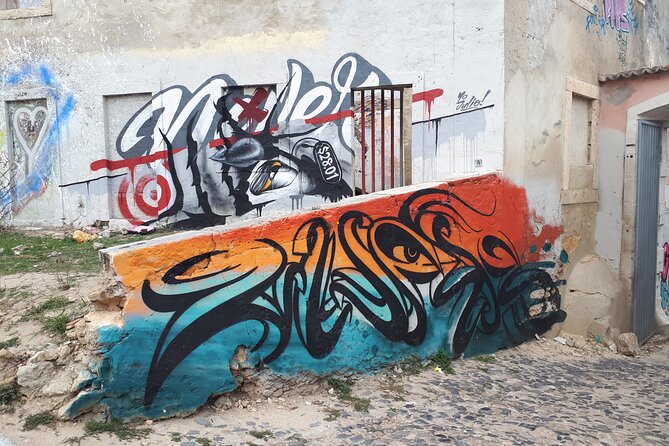
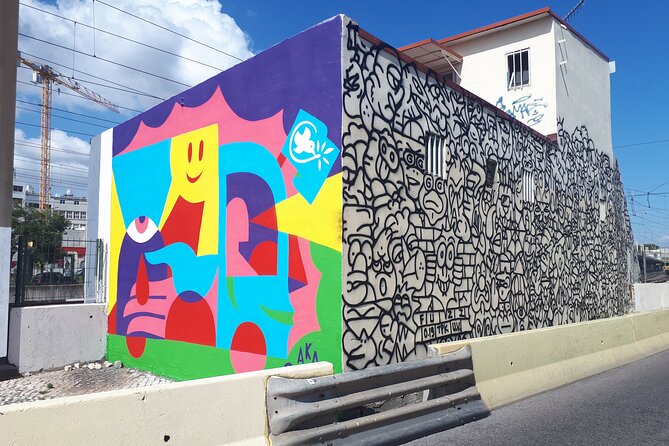
Lisbon’s street art is more than paint on old walls. On this three-hour walk, you move through Mouraria and Graça, where murals and photographs offer a way to read the neighborhoods, their artists, and the city’s changing culture. The route also takes you past fado-related images and up to a rewarding hilltop view.
I like two things in particular: the small group, capped at 10, gives you room to ask questions, and guides with ties to Lisbon’s art scene can explain how a work was made and what it says. I also like that this is a walking tour through residential streets, not just a stop-and-snap mural circuit.
The trade-off is the terrain. Expect steep hills and many stairs, with a moderate level of fitness needed. Good shoes are essential, and in wet or hot weather you will want to plan accordingly.
At a glance
- Mouraria’s art and fado connections: Look at street art and photographs that reflect the neighborhood and its musical roots.
- Graça from above: Climb to Miradouro da Graça for a view over Lisbon and its rooftops.
- A long stretch in Graça and São Vicente: Spend most of the walk among large murals and work by local and international artists.
- A striking azulejo wall: Finish the listed route at Jardim Botto Machado, beside a long, colorful tile wall depicting Lisbon.
- Small-group format: No more than 10 people means a better chance to hear the guide and ask questions.
- A proper uphill walk: The roughly three-hour route includes stairs, steep streets, and downhill sections.
Read Lisbon’s streets one mural at a time
This tour treats street art as a way into Lisbon, not just a backdrop for photos. You see large murals, smaller details, and photographic work, while your guide explains the artists, techniques, and ideas behind them. The subject matter can include social and political themes, as well as the changing character of the neighborhoods.
That context is what makes the walk useful even if you already enjoy street art. Your eye starts to separate different kinds of work and notice how a piece fits its setting. One guide, for example, helps distinguish street art from graffiti, a distinction that can change how you understand what is on a wall and why it is there.
The art itself is temporary. Pieces can change, disappear, or be covered, so the route is not a fixed gallery. That makes the experience feel tied to the city as it is now, though it also means you should not expect every mural to remain exactly as seen on a previous visit.
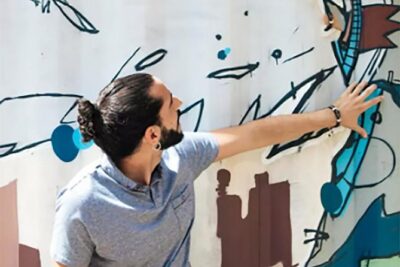
The guides vary. Names associated with the tour include Diego or Diogo, Vero or Véra, Ben, Luisa, and Vera. Some guides are practicing artists or connected to local art groups, which can bring a useful first-hand perspective. You cannot count on a particular guide, but the strongest reason to take this walk is the explanation and local context, not a guaranteed list of murals.
More street art walks in Lisbon:
- Lisbon: Street Art Tour
★ 4.9 · 1,324 reviews - Lisbon: Kickstart Street Art Walking Tour
★ 4.9 · 717 reviews - Lisbon: Street Art Tuk Tuk Tour
★ 4.9 · 372 reviews
Begin in Mouraria, where walls hold local stories

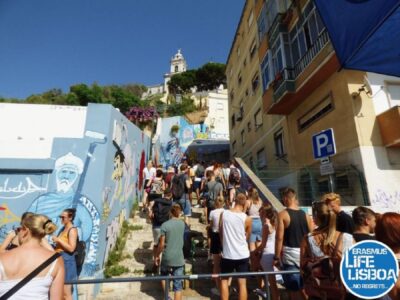
The tour starts at Largo da Graça 13, a central meeting point for the walk. From there, you head to Escadinhas de São Cristóvão in Mouraria, where the streets serve as an open-air gallery. The first stop takes about an hour, enough time to explore the art and hear about the neighborhood rather than simply pass through it.
Mouraria is closely linked with the roots of fado, and the tour connects that musical history to images and local life represented on the walls. Look for photographs and artwork that refer to the area’s character and people. The point is not to turn every wall into a lecture, but to see how public art can preserve a sense of place and give local stories room in the street.
This is also where a guide’s perspective can make a real difference. A painting can look like a striking shape from across the street, then become more legible when you learn who made it, what method they used, or what local issue sits behind it. Guides with an art practice or links to the Lisbon art scene may be able to speak about those choices from close range.
Allow yourself to slow down here. A good deal of the pleasure comes from noticing the pieces you would otherwise walk past, not from racing to cover a checklist. The first hour sets the pace for the rest of the tour, so wear shoes that are comfortable on uneven streets and stairs.
Climb to the Miradouro da Graça
From Mouraria, the route climbs toward Miradouro da Graça, also known as the Sophia de Mello Breyner Andresen viewpoint. The stop is about 15 minutes, but the climb is the main event. Graça sits high above the city, and the viewpoint gives you a chance to pause, take photos, and look out across Lisbon.
This is a practical moment to catch your breath before continuing. The walk is not a bus tour with a short stroll at each stop. Even when the group pauses often, the hills add up, and the route includes both uphill and steep downhill stretches.
The view also helps make sense of the city’s topography. You have been moving through narrow streets and close-set buildings; from above, the rooftops and hills become easier to read. If you are looking for a relaxed, level walk, this is the point to consider your comfort honestly. If you are happy to climb, the viewpoint rewards the effort.
Bring a camera if you like taking city photos, but keep some attention on the walk itself. The murals are not all at the obvious viewing points, and the guide may draw your eye to details along the way.
Spend the longest stretch among Graça’s murals
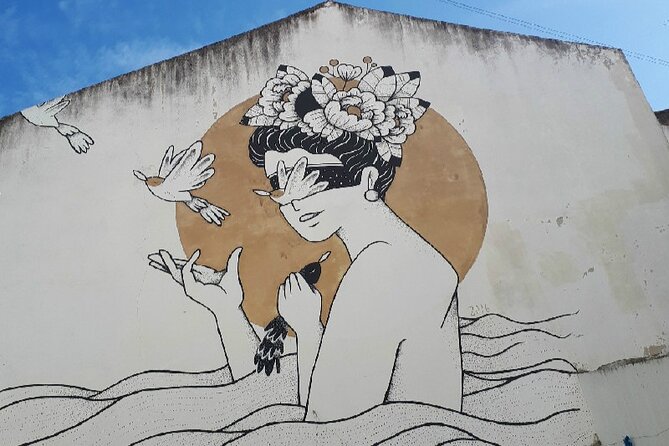
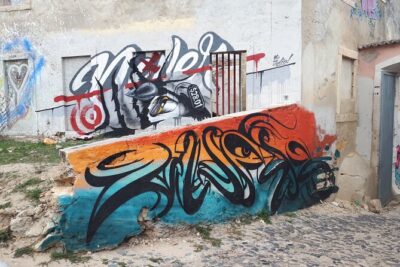
The route then spends about an hour and a half in Graça and São Vicente, the longest section of the tour. Graça is described as a neighborhood with large murals by artists from Lisbon and elsewhere. The route also passes the group’s Walls of Fame, a named collection of works within the street-art scene.
This is where you are likely to get the fullest picture of the variety on offer. Large façades can carry works that are visible from a distance, while smaller pieces reward a closer look. The guide can explain how styles, methods, and messages differ, and why some works are authorized while others belong to a less formal scene.
That last distinction matters. Street art is not one single practice, and treating every mark as the same kind of work misses much of the story. The tour’s value lies in helping you see the choices behind a piece and the way art can reflect a neighborhood’s social and political life.
The long stop also leaves room for conversation. Groups are limited to 10, and guides have made an effort to engage people individually and answer questions. If you enjoy asking about artists, techniques, or local changes, this format is better suited to you than a large group moving quickly from one photo stop to the next.
The route can change as the art changes. That is a feature of a living street-art scene, but it means you should not treat the walk as a guaranteed tour of specific, permanent works. You are going to see what is there at the time, with a guide who can explain how the area’s art continues to shift.
More tours and experiences in Lisbon:
- Lisbon City Center Tour – The Unmissable Lisbon
★ 5.0 · 22,234 reviews - Lisbon: Sintra, Pena, Regaleira, Cabo da Roca & Cascais
★ 4.7 · 19,656 reviews - Lisbon: Jerónimos Monastery Entrance Ticket
★ 4.1 · 14,164 reviews - Lisbon: History, Stories and Lifestyle Walking Tour
★ 4.8 · 10,902 reviews
Finish beside Jardim Botto Machado’s tile wall
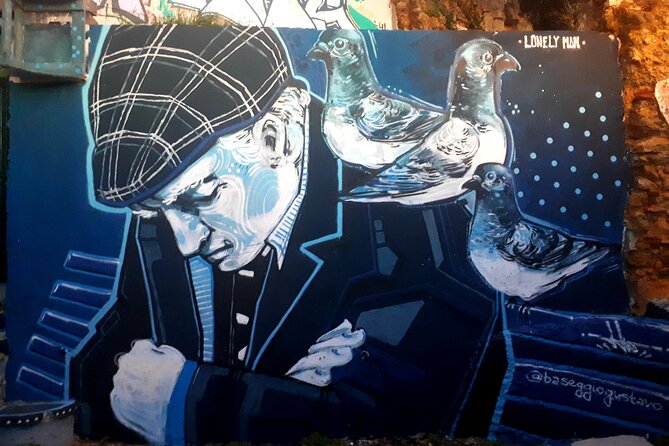
The final listed stop is Jardim Botto Machado, where the tour points out a long azulejo wall representing Lisbon in a traditional tile style. The wall is described as the world’s longest azulejo wall. Its color and scale offer a different visual language from the murals, and make a fitting contrast after hours spent looking at contemporary street art.
The stop is about 15 minutes. It gives you one more chance to take photos and consider how Lisbon’s public art ranges from familiar tilework to newer murals and photography. The city’s image is not built from one style alone, and seeing these forms on the same walk helps put them in conversation.
The stated end point is flexible. The tour begins at Largo da Graça 13, but the walk may finish somewhere in Graça or Alfama depending on the time and the group’s energy. Leave some room in your plans afterward rather than scheduling a tight connection or a reservation that assumes you will return to the exact starting point at a precise time.
Budget three hours, and prepare for the hills
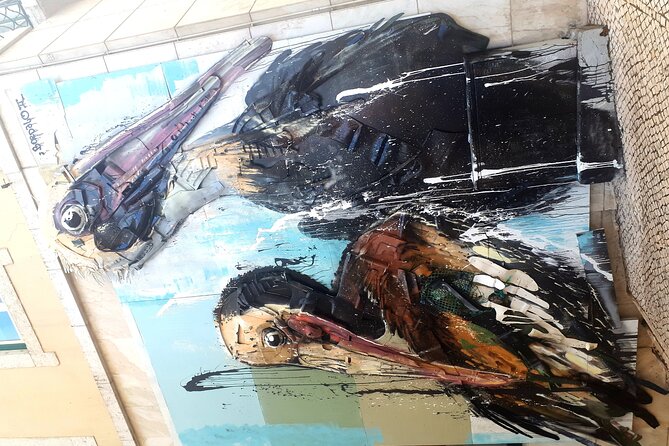
The price is $24.20 per person for an experience of about three hours. For that amount, you get a small-group walk, an English-speaking guide, and access to local context that is hard to assemble by simply following a map. The tour is especially good value if you are interested in art, urban culture, or seeing neighborhoods beyond the most familiar central sights.
It is less useful if you want a low-effort outing or a broad survey of Lisbon by vehicle. You will be walking for most of the experience, and the hills and stairs are a real part of the route, not a minor detail. The maximum group size of 10 helps keep the walk personal, but does not make the climbs easier.
Plan to eat beforehand. The walk takes the full three hours, and there is no listed meal stop. Carry water, wear supportive walking shoes, and bring an umbrella in rainy weather. In hot conditions, the uphill sections can feel harder, so pace yourself and take advantage of the stops.
The tour is offered in English, uses a mobile ticket, and starts near public transportation. It is recommended for people with a moderate level of physical fitness. Service animals are allowed. The experience is booked, on average, about 20 days ahead, so it is sensible to plan early if your Lisbon dates are fixed, though that average is not a promise of availability.
Who will get the most from this walk

I would put this tour high on the list if you like art but want more than a gallery visit. It suits curious walkers who enjoy hearing how creative work relates to everyday life, and who are willing to ask questions and look closely. It can also work well for solo visitors, couples, or families who are comfortable with a long walk and stairs.
It is a strong choice if you have already seen Lisbon’s main landmarks and want a different way to understand the city. The route offers a local perspective through Mouraria, Graça, and São Vicente, while the guide’s explanations help connect art to people and place. You may also come away with ideas for other neighborhoods or places to eat, since guides have shared additional local recommendations.
Think twice if you have mobility limitations that make stairs or steep hills difficult, or if you are looking for a short, flat activity. The tour is not described as accessible for people who cannot manage those conditions. Even fit walkers should not mistake the three-hour duration for a gentle stroll.
Should you book the Lisbon Street Art Tour?

Book it if you want to see Lisbon through its street art and hear the stories behind the work, and if you are ready for a few hours on foot. The small group, locally focused guides, and mix of Mouraria’s fado connections with Graça’s murals make this more than a photo walk.
Skip it if steep climbs are a poor fit or if your schedule cannot absorb a flexible end point. For most art-minded visitors who can handle the terrain, $24.20 buys a distinctive, grounded introduction to parts of Lisbon you might not find on your own.
FAQ
How long is the Lisbon Street Art Tour?
The tour lasts about three hours. The listed stop times add up to three hours, though the actual finish may vary with the group’s pace and energy.
Where does the tour start?
It starts at Largo da Graça 13, 1170-364 Lisboa, Portugal.
Where does the tour end?
The stated end point is somewhere in Graça or Alfama, depending on the time and the participants’ energy. It may not be the same as the starting point.
How large is the group?
The tour has a maximum of 10 participants.
Is the tour physically demanding?
It requires a moderate level of fitness and includes uphill walking, steep downhill sections, and many stairs. Good walking shoes are recommended.
What is the cancellation policy?
You can cancel at least 24 hours before the start time for a full refund. Cancellations or changes made less than 24 hours before the start time are not accepted for a refund.
Lately reviewed in Lisbon
- Lisbon: Sunset and Wine Luxury Catamaran Cruise★ 5.0 · 17 reviews
- Lisbon Sunset Boat Tour with local Snacks & Drinks★ 4.9 · 11 reviews
- Lisbon: Street Art Tour★ 4.7 · 66 reviews
- Lisbon: Streets of Alfama Private Segway Tour 1.5hour★ 4.8 · 15 reviews
- Lisbon: Sunset Boat Party with 2 Drinks and Free Club Entry★ 3.9 · 93 reviews
- Tuk Tuk Lisbon: Street Art 2-Hour★ 5.0 · 6 reviews
- Lisbon 3-Hour Street Art Tour★ 4.6 · 63 reviews
- Lisbon Street Art Tour★ 5.0 · 4 reviews
Lisbon Street Art Tours, compared.


3-Hour Guided Street Art Walking Tour of Lisbon
Read our review →


Browse the lists this tour appears in